
















1000KG/H Feed Pellet Production Line for Cattle and Sheep
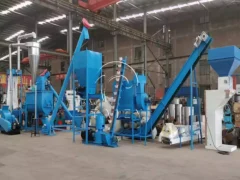
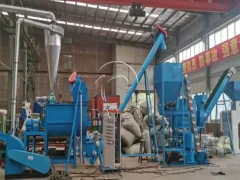
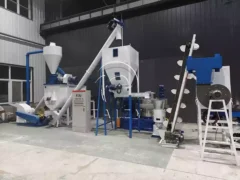
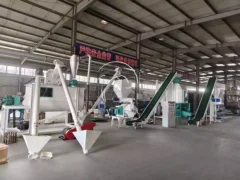
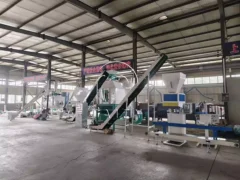
1000KG/H Feed Pellet Production Line for Cattle and Sheep
Animal Feed Making Line | Grain & Grass Pellet Processing Solutions
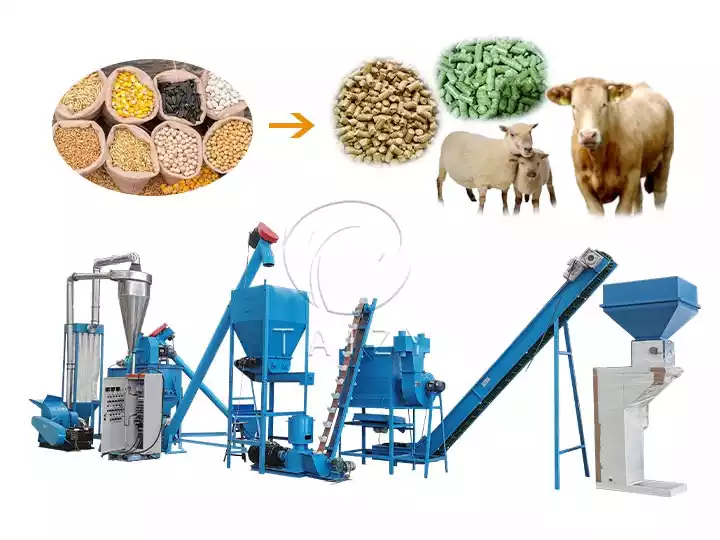
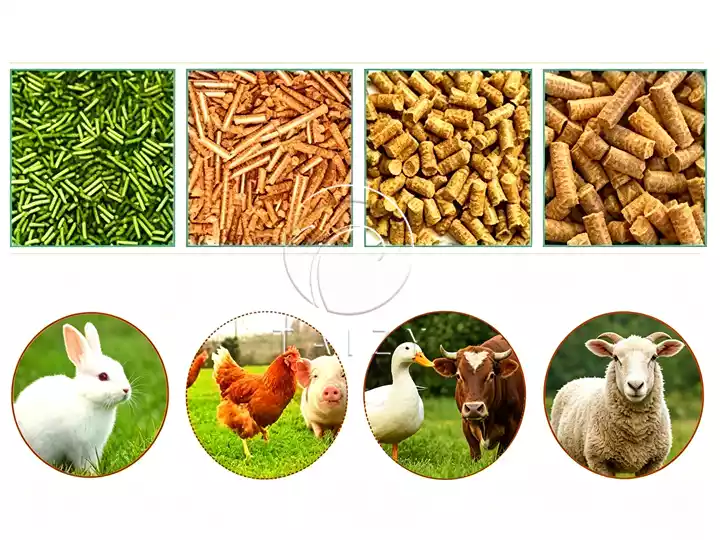
For ruminant farms raising cattle and sheep, feed cost and processing efficiency directly determine farming profits. Compared with feeding bulk raw materials directly, pellet feed processed through crushing, mixing, pelleting, cooling, and packaging is easier for storage, transportation and quantitative feeding.
This 1‑ton‑class feed pellet production line is developed for medium‑and‑small‑scale farms, family ranches, agricultural cooperatives and feed processors. It comes in two standard configurations: Plan A (800‑1500 kg/h general‑purpose model) and Plan B (800‑1000 kg/h high‑forage adapted model). It supports processing of raw materials including straw, forage grass, corn, grains and bran.
Many farming and feed‑processing operators often encounter pain points such as heavy workshop dust, high labor consumption, poor pellet forming performance, and fluctuating output when producing pellet feed on‑site.
This complete feed pellet production line realizes full‑process automation covering crushing & dust removal, mixing, pelleting, cooling, and automatic packaging. It effectively cuts labor input and stabilizes the quality of finished pellets.
Applicable raw materials & target customer groups
Processable raw materials
- Coarse‑fiber forage: Napier grass, hay, straw, and pasture grass (the crushing fineness of raw materials should be within 10 mm, ideally below 6 mm).
- Grain concentrates: Corn, sorghum, soybean, soybean meal, rice bran, wheat bran, etc.
- Mixed formulas: Free proportioning is available for 70% forage + 30% grain, all‑straw feed, and grain‑based livestock & poultry feed. There is no mandatory fixed ratio between forage and powder materials.
Target customers
- Large‑scale cattle and sheep farms, ruminant breeding bases (producing complete‑ration pellet feed on‑site).
- Small‑and‑medium‑sized feed mills, forage deep‑processing export‑oriented enterprises.
- Rural agricultural product processing cooperatives, straw recycling and re‑processing plants.
- Purchasers of complete sets of feed pellet production line equipment for export business.
Core advantages of complete feed pellet production line
- Full‑process automation: With an integrated control cabinet for closed‑loop crushing‑conveying‑mixing‑pelleting‑cooling‑packaging. Only 1‑2 operators are required to cut labor costs.
- Eco‑friendly dust removal: Hammer mill with cyclone collector + 16‑bag dust collector (air volume 6000‑9000 m³/h), full dust collection to meet environmental requirements.
- High‑quality pellets: 4‑roller / 3‑roller pellet mill, pellet diameter adjustable 2.5‑8 mm. Cutter controls pellet length. Counter‑current cooling‑sifting unit removes heat, moisture and fines. Pellets are hard‑proper, mildew‑resistant for long‑term storage.
- Dual‑crushing process: Forage and grains are crushed separately before mixing for uniform fineness without caking and less die blockage.
- Flexible site adaption: Two plans with different footprint for modular layout. VFD‑driven conveyors avoid blockage and output fluctuation.
- Auto‑packaging: 25‑50 kg auto‑weighing & sewing unit. Cooled pellets go directly to bags for export and stock.
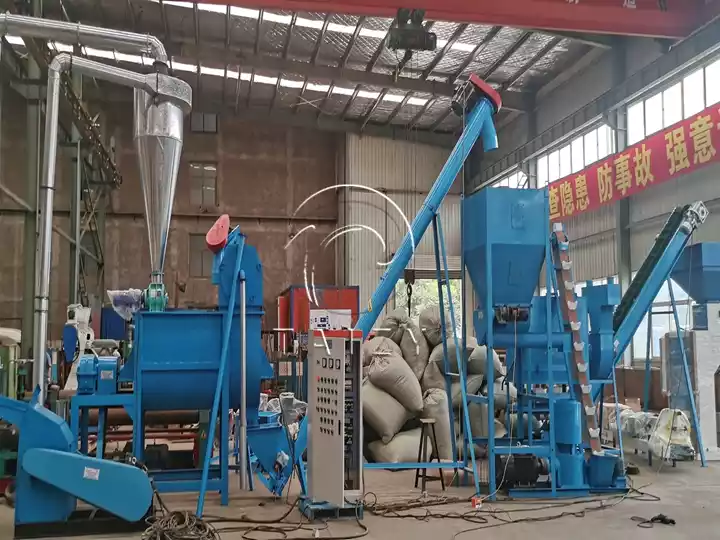
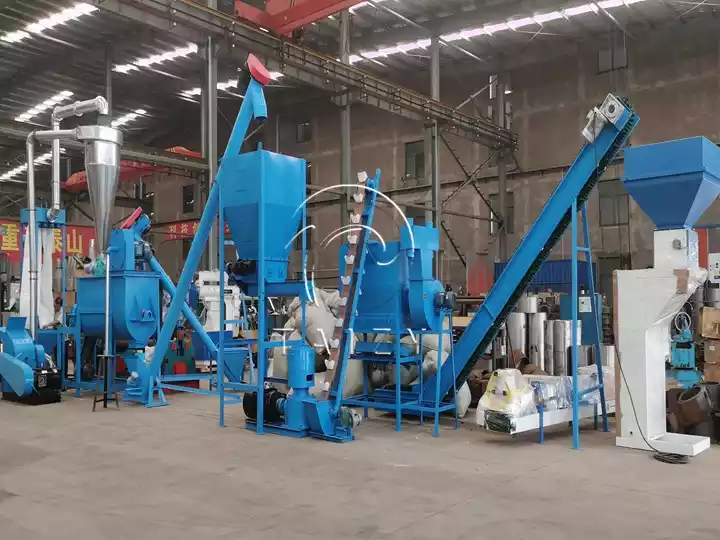
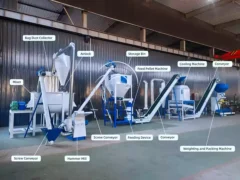
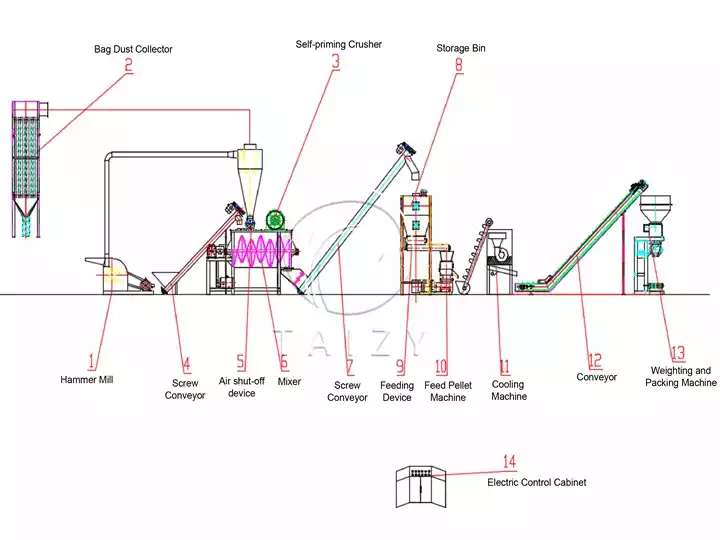
Animal feed processing line standard process flow
Closed‑loop continuous feed pellet production line from raw material feeding to bagged finished goods:
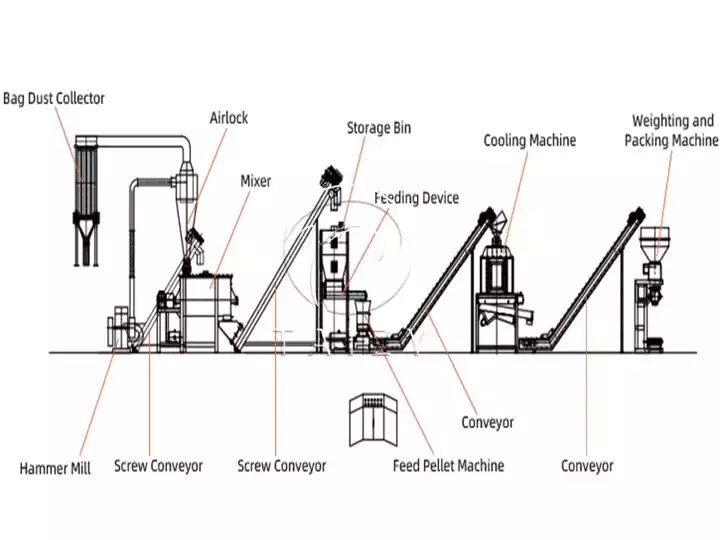
- Crushing Section: Crush forage and grains separately. Bag dust collector removes dust; air shut‑off device stabilizes feeding and prevents back‑flow.
- Conveying & Mixing Section: Screw conveyor feeds materials into mixer, then buffered in storage bin.
- Variable‑frequency Feeding: Even feeding to avoid die blockage and capacity fluctuation.
- Pellet Forming: Flat‑die pellet mill makes pellets; cutter adjusts pellet length for hot pellet output.
- Cooling & Screening: Cool and dehumidify hot pellets, sieve out fines to improve finished rate.
- Automatic Packing: Automatic weighing, bagging and sewing for storage or delivery.
- Centralized Control: Control cabinet manages line start‑stop, speed adjustment and fault alarm.
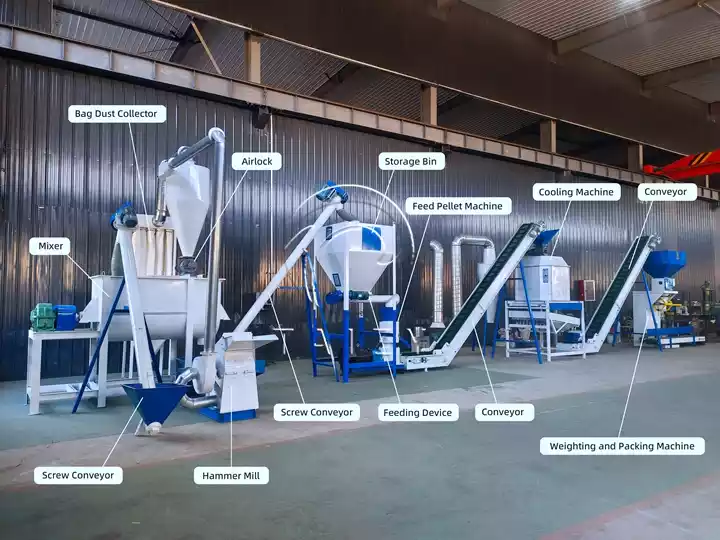
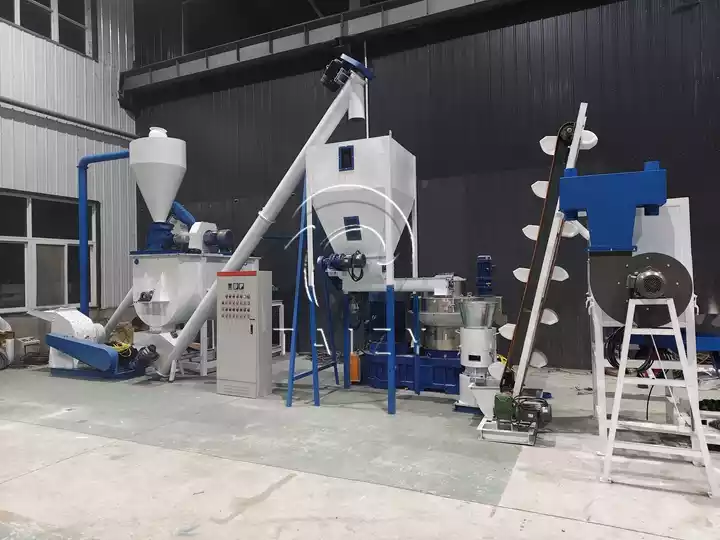
Parameter comparison of two standard solutions
Solution A: 1‑Ton General‑Purpose Model (Capacity: 800‑1500kg/h)
- Rated capacity: 800‑1500 kg per hour
- Total installed power: 89.16 KW
- Floor space: L22m × W5m × H5m
- Applicable raw materials: Grains, straw and forage grass; pellet diameter 2.5‑8 mm
- Key configuration highlights: Double‑screw conveying and independent buffer storage bin. It features higher upper‑limit capacity and supports large‑batch processing of both grains and high‑fiber forage materials.
Solution B: Forage‑Dedicated Model (Capacity: 800‑1000kg/h)
- Rated capacity: 800‑1000 kg per hour
- Total installed power: 85.85 KW
- Floor space: L25m × W6m × H4.5m
- Applicable raw materials: High‑proportion forage formula (70% napier grass + 30% grains); pellet diameter 4‑8 mm
- Key configuration highlights: Counter‑current cooling & screening integrated machine (combining cooling and powder screening functions). The mixing main unit is integrated with a self‑priming crusher, with an anti‑blocking structure optimized for high‑fiber forage grass.
How to select a suitable feed pellet production line?
- Raw materials: Choose Solution A for mixed‑material processing; choose Solution B for dry napier grass or a formula with over 70% forage.
- Pellet size: Solution A for 2.5‑8 mm pellets; Solution B for 4‑8 mm pellets. Match sizes to livestock demands.
- Workshop: Solution A: 22×5×5 m for narrow workshops. Solution B: 25×6×4.5 m with good maintenance space. Reserve storage & passage area.
- 包装: Solution A for 25‑50 kg/bag; Solution B for 10‑50 kg/bag. Packing unit can be removed for self‑use.
- Capacity & scale: Select A for daily output>10 tons and peak‑capacity need. Select B for stable 800‑1000 kg/h forage feed for better cost‑energy performance. Actual output depends on raw materials, moisture and working conditions; do not rely only on pellet mill parameters.
- Environmental protection: Both come with bag dust collectors. Larger filter area optional for strict dust control.
- Customization: Adjust conveyor length for workshop; replace ring‑dies for 2.5‑8 mm varied pellets.
- Investment & quotation: Compare full feed pellet production line equipment rather than a pellet mill alone. Offer formula, capacity, pellet size, packing, workshop size, and automation needs for an accurate quotation.
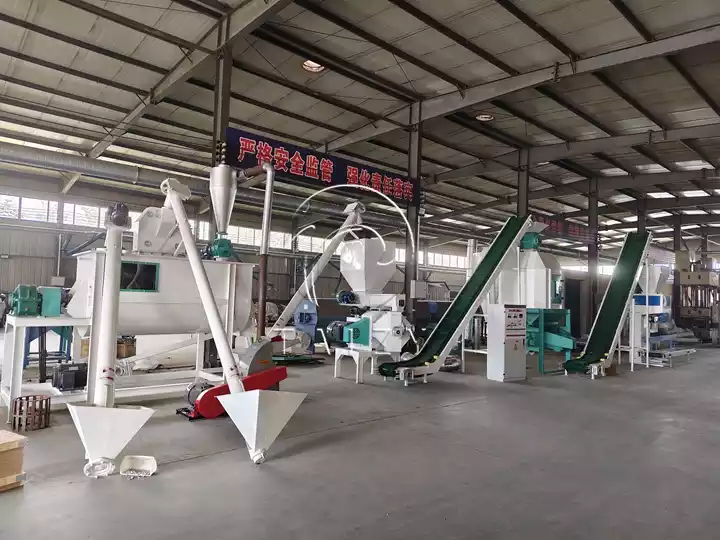
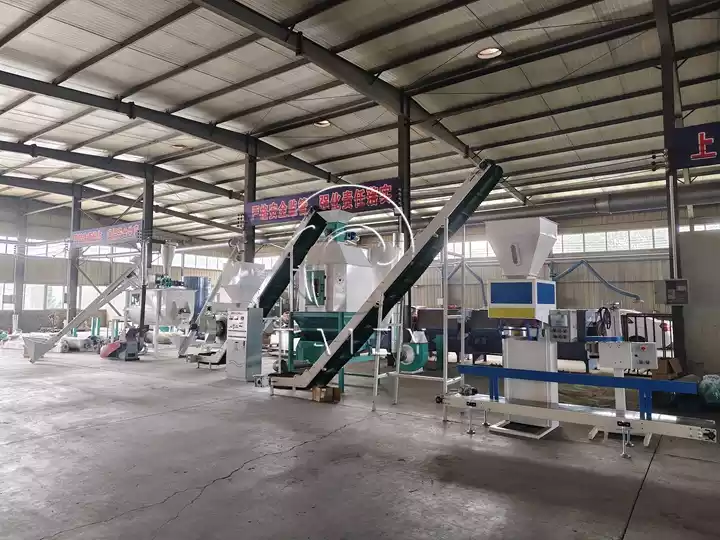
One‑stop supporting equipment for cattle & sheep raising
To further boost the overall mechanization level of cattle and sheep farms, a complete raising‑equipment system can be configured according to the breeding scale. For example:
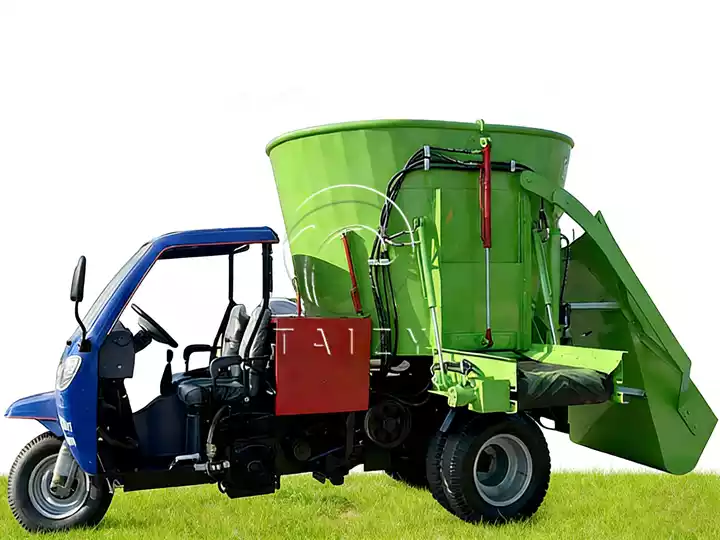
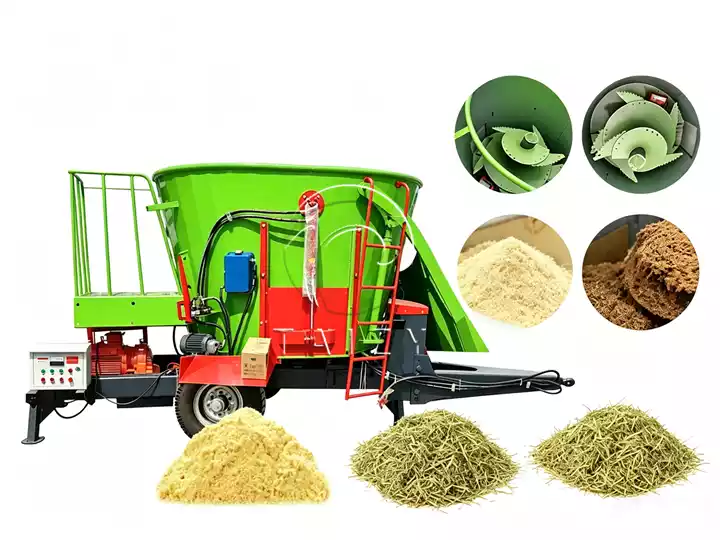
- Once pellet feed is produced, a TMR forage feed mixer truck can be matched to thoroughly mix silage, hay, concentrate feed, and pellet feed.
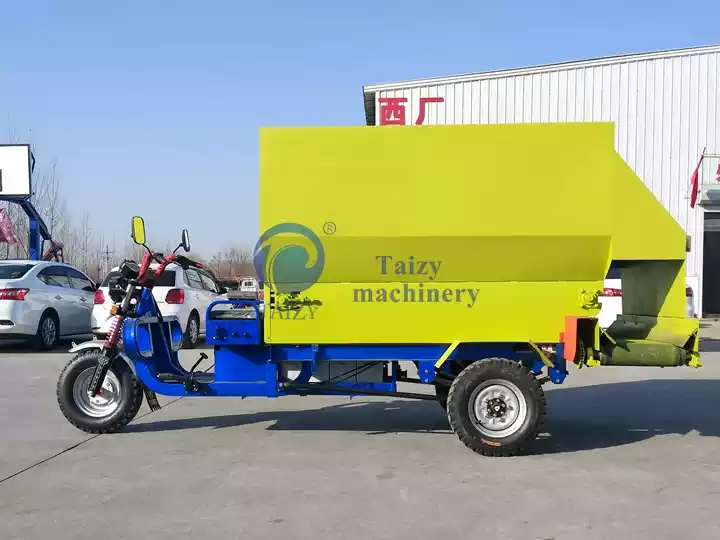
- Farms may also select equipment such as TMR cattle‑sheep feed spreaders based on feeding patterns, so as to achieve seamless continuous connection covering feed processing, silage storage and automatic feeding.
常见问题
What crushing fineness for forage & grain?
Grain ≤6mm; straw/hay ≤10mm. Best pelleting result under 6mm.
Moisture requirement for raw materials?
Moisture ≤20%. High moisture causes die‑blocking & mildew; low moisture leads to loose pellets with more powder.
Fixed mixing ratio for forage and grain?
No fixed ratio, adjustable as your formula.
Is pellet length adjustable?
Yes, adjust the gap between outlet cutter and ring die of pellet mill.
How many operators for the whole feed pellet production line?
1‑2 workers only, for feeding and packing monitoring.
Can equipment be added/removed for the two solutions?
Mod‑configurable. Oil sprayer, secondary sieve and other units optional per budget.
Installation & technical support available?
Drawings provided. Remote commissioning guidance, operation training and spare‑parts after‑sales service are included.