


















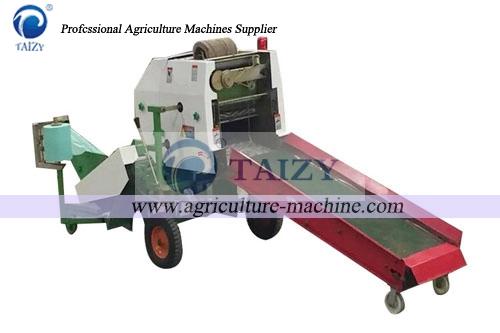
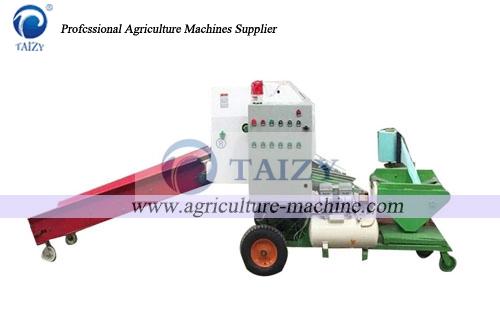
Beim Einsatz der Vollautomatischen Silageballenpresse um Silage herzustellen, müssen wir die Zuführung im Einstellbereich der Maschine stoppen, damit die Dichte des Futters optimal sein kann, denn je höher die Dichte, desto mehr Luft verbleibt im Futter. Weniger, im Gegenteil, je mehr Luft im Futter ist, bevor wir die Bedeutung der Silage entschlüsseln können, verstehen wir zunächst, wie der Sauerstoff in der Silage nach dem Wickeln verbraucht wird!
First of all, the respiration of plants, although the plants are shredded by us, but the plant cells are still breathing all the time. They suck in oxygen, and they exhale carbon monoxide. The whole process is to consume organic matter in plants. Completed, the more oxygen, the more organic matter is consumed, that is, the more dry matter loss we often say, and if there is too much oxygen remaining in the feed, the large amount of heat generated by the respiration will cause the feed to heat up. If the feed temperature is too high, it is likely to cause other bad reactions, resulting in the loss of a large amount of nutrients in the feed. Today, Xiaobian gives everyone a way to reduce the loss of dry matter:
In order to reduce the dry matter loss of silage, the best and most effective way is to increase the density of the feed and add the appropriate amount of silage starter according to the actual situation.
The chemical reaction of plant respiration is as follows: C6H12O6+6O2=6CO2+ 6H2O+ 2821KJ. The process of respiration is a process in which the organic matter contained in the plant and the oxygen react chemically to produce carbon monoxide and water and energy. The energy generated by the respiration brings about the temperature change of the feed, so the fever and the plant occurring when the silage is produced There is a certain relationship between respiration.
Gleichzeitig mit der Atmung der Pflanze verbrauchen einige der verbleibenden aeroben Verderbnisbakterien und Schimmel in der Silage auch den Restsauerstoff im Futter, und die in der Silage enthaltenen Glukose, Fruktose, Proteine und andere Substanzen werden als Reaktanten genutzt. Es finden Stoffwechselreaktionen statt, die Mykotoxine (wie Aflatoxine, Penicilline, Aflatoxine usw.) und einige Dinge produzieren, die Silagen verderben. Daher hält die Silage mit unzureichender Festigkeit lange, was nach der Fermentation zu minderer Qualität führt. Obwohl das Problem in diesem Bereich fatal ist, können wir diese Art von Situation so weit wie möglich vermeiden. Die Vollautomatische Silageballenpresse kann die Verdichtung des Futters maximieren, den Verlust an Trockenmasse verringern und die Qualität der Silage verbessern.