


















Reducing the rate of broken rice and increasing the rate of whole rice have become a way to improve the comprehensive economic benefits of enterprises. The higher the temperature of the rice mill is, the more broken rice is produced. This is a common phenomenon in rice factories. In the process of rice milling, the sand roller grinds the surface of the rice grain to remove the crust layer and the rice grains in the whitening chamber are subjected to friction and collision, which will generate a large amount of heat, so that the surface temperature of the rice grain is increased.
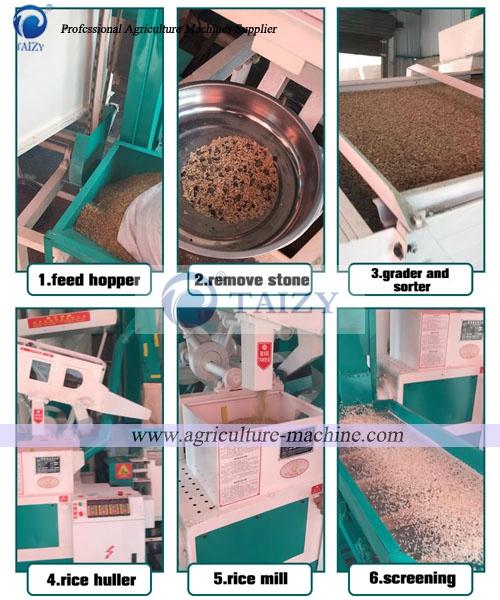
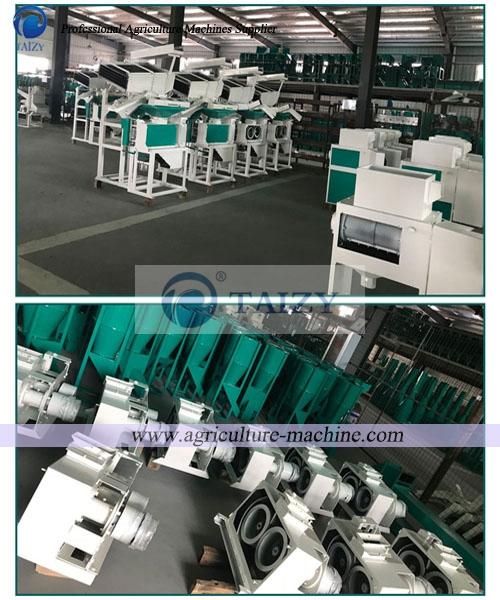
Due to the poor thermal conductivity of the rice grains and the slower inward transfer of the surface temperature of the rice grains, a temperature gradient (temperature difference) is formed from the outside to the inside. A large temperature difference causes thermal stress to be generated inside the rice grains, and the thermal stress exceeds the inherent strength of the rice grains. The rice ruptures or bursts. The structure of the traditional rice machine determines that the rice machine has a large ventilation resistance, and the air volume passing through is small, and it is difficult to suppress the rice temperature from rising during the rice milling process to produce broken rice. Achieving low-temperature rice milling and inhibiting the rise of rice temperature is an effective method to reduce cockroaches.
En augmentant la quantité d'air qui pénètre dans la chambre de blanchiment, il est possible d'atteindre une faible augmentation de la température et d'augmenter le taux de mouture du riz. Le riz à faible augmentation de température utilise le vent pulvérisé dans la chambre de blanchiment pour traverser la couche de grains de riz afin d'emporter la chaleur générée par le broyage et de supprimer la montée en température du riz. Par conséquent, la technologie clé du machine de mouture de riz à faible température consiste à augmenter la pression du vent et le volume d'air du souffleur d'air autonome de la machine à riz, à réduire la résistance de l'air soufflé dans la partie avant de la chambre de blanchiment et à augmenter la quantité de ventilation de la zone de déplacement de blanchiment par unité de production.