


















O desenvolvimento da máquina debulhadora de milho
According to statistics, since the 1980s, China has begun to purchase a batch of advanced debulhador de milho from abroad. From the hand-operated debulhador de milho to electric corn thresher, farmers gradually relieve from the heavy manual labor. In the end of 2014, there were more than 240 top agricultural machine manufacturers in China, and they sold more than 350,000 sets, corn sheller, annually. China’s agricultural development constantly tends to be mechanized, and the development and research of it has gradually been put on the agenda and has become the focus of China’s agricultural development.
Desde o nascimento do debulhador de milho até ao desenvolvimento e, depois, à popularização, é um sinal da modernização do desenvolvimento agrícola da China. Devido ao vasto território chinês, as condições climáticas e os requisitos agronómicos de áreas montanhosas e as condições económicas variam amplamente. Portanto, o uso do debulhador de milho é muito extenso.
The annual harvest season is a busy time. Many farmers began buying debulhador de milho in advance, referring to its band, price and the technical parameter.
However, we can’t just look at the appearance to judge the quality of the machine, and the internal fittings are the most important. Thus, good thresher must be practical. Taizy Machinery specializes in agricultural equipment for more than 10 years, regarding designing machines, we consider both aesthetics and practicality. Our corn thresher is not only efficient but also designed with good looking.
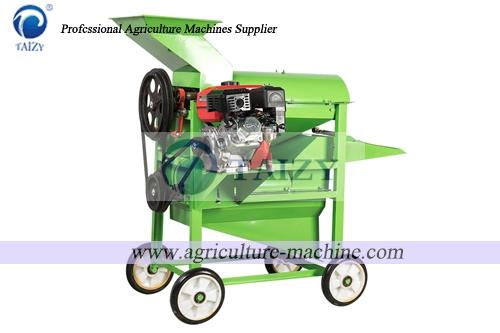
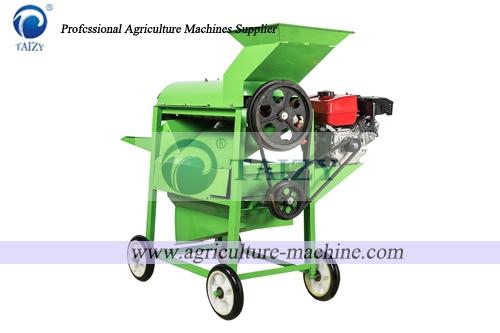
As we all know, machine many occur some problems when operation. The biggest problem is that corn kernels can not be threshed fully. Today I will introduce some common problems and suggestions for you.
1. Alguns grãos de milho ainda estão no sabugo
reason:
(1). operator places too much corns into machine or the it is not uniform to put corn into machine.
(2). The threshing gap between the groove and the concave plate is too large.
(3). The rotation speed of the drum is too low;
(4). The corn is too moist.
Solução
(1). reduce the amount of feed, even feeding.
(2). Correctly adjust the threshing gap, and replace the worn parts in time.
(3). The pulley of the power debulhador de milho should match the pulley of the thresher. If the pulley is slippery, adjust the tensioner to tighten the belt.
(4). the straw too wet food should be properly ventilated, dried and then threshed.
2. A taxa de limpeza de debulhador de milho é baixo.
Razão:
(1). O fluxo de ar insuficiente provoca deslizamento da correia, fazendo com que a velocidade do ventilador não atinja o índice.
(2). A porca da polia do ventilador está solta, formando um regime de marcha-lenta, e o ventilador não pode ser usado normalmente.
(3). Existem demasiados palos no tambor de debulha.
Solução:
(1). Verifique a tensão da correia do ventilador; se a polia de tensão estiver muito solta, ajuste o tensionador adequadamente e aperte a polia até ao grau apropriado; se o parafuso de fixação da polia do ventilador estiver solto, aperte-o.
(2). Reduzir a quantidade de milho fornecido ou ajustar o espaço de alimentação.