


















Bevor man Silage herstellt, muss man wissen, was Silage ist, welche Rohstoffe für Silage verwendet werden, den Silageprozess, die Arten von Silage und das Prinzip der Silage.
Was ist Silage/Maissilage?
Silage is formed by sealing and fermenting plant feeds with more water content, and Graskutter is made by fresh corn stalk. It is mainly used to feed ruminants. Silage is more durable than fresh feed and has stronger nutrients than dry feed. In addition, the silage storage occupies a small area and there is no fire problem. Silage has a sour smell, soft and juicy, good palatability, rich nutrition, and is good for long-term storage. It is an excellent source of feed for livestock.
Was sind die Rohstoffe für Silage?
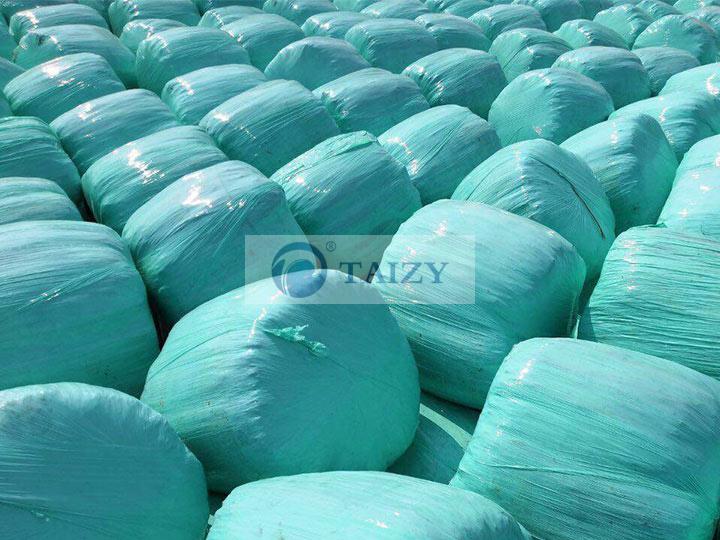
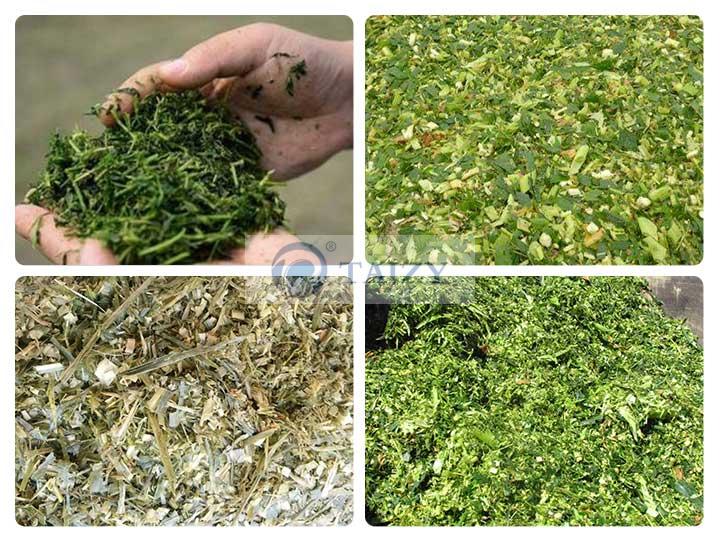
Use a Häcksler or a straw harvester to crush or harvest fresh crop products and by-products that contain a certain amount of sugar, such as corn stalks, wheat stalks, rice straw, sweet potato seedlings, and forage grass and other raw materials. The raw material is cut into lengths of 2-4 cm. It can be longer for those with more water content and softer, and shorter for those with less water content and harder. Various raw materials can be mixed and formulated, and the moisture content is preferably 55-70%. The prepared raw materials can be sealed, fermented, and permanently silaged by using a silage baling machine. Mature silage is green to dark green in color, soft and moist, and can be stored for about one year.
Der Prozess der Silageherstellung
There must be two processes from green pasture or straw to silage. One is the cutting or crushing of raw materials, and the other is the silage wrap. According to the livestock you raised, you can crush pasture, corn stalks, or other straw into different degrees, such as segments and kneading. After that, the crushed green feed is bundled, wrapped, and fermented by using a Silagepressmaschine. The suitable temperature during the silage process is 20°C, and the highest temperature should not exceed 37°C. The temperature is generally controlled at 35°C. It is best not to exceed 30°C. Generally speaking, the total number of microorganisms reaches the highest peak during 5-7 days of fermentation, and lactic acid bacteria are the main ones. Normal silage fermentation generally takes 17 to 21 days.
Arten von Silage
Die aktuelle Silage umfasst Gras-Silage, Maissilage, Reisschalen-Silage usw. Nach Silagemethode gibt es folgende Arten von Silage.
Allgemeine Silage: Die Rohstoffe werden gehackt, verdichtet und versiegelt, um Milchsäurebakterien in einer anaeroben Umgebung zu vermehren, wodurch die Stärke und lösliche Zucker im Futter in Milchsäure umgewandelt werden. Wenn Milchsäure eine bestimmte Konzentration erreicht, hemmt sie das Wachstum von Verderbnisbakterien und erhält die Nährstoffe im grünen Futter.
Halbtrockene Silage (niedriger Feuchtigkeitsgehalt): Der niedrige Feuchtigkeitsgehalt der Rohstoffe bringt die Mikroorganismen in einen physiologisch trockenen Zustand, und ihr Wachstum und ihre Reproduktion werden gehemmt. Die Mikroorganismen im Futter fermentieren schwach, und die Nährstoffe werden nicht abgebaut, um die Nährstofferhaltung zu erreichen. Aufgrund des niedrigen Feuchtigkeitsgehalts dieser Silageart sind andere Bedingungen weniger streng, sodass im Vergleich zu allgemeiner Silage ein breiterer Rohstoffbereich genutzt werden kann.
Additiv-Silage: Es werden einige Zusätze hinzugefügt, um die Fermentation der Silage zu beeinflussen. Zum Beispiel das Hinzufügen verschiedener löslicher Kohlenhydrate, das Inokulieren mit Milchsäurebakterien, das Hinzufügen von Enzympräparaten usw., die die Milchsäurefermentation fördern, schnell eine große Menge an Milchsäure produzieren, sodass der pH-Wert schnell den erforderlichen Bereich (3,8-4,2) erreicht; oder verschiedene Säuren, antibakterielle Mittel usw. hinzufügen. Dies kann das Wachstum von Verderbnisbakterien und anderen Mikroorganismen, die der Silage schaden, hemmen. Dies kann die Silagequalität verbessern und den Bereich der Rohstoffe für Silage erweitern.
Das Prinzip der Silage
Das Prinzip der Milchsäurefermentation
Silage is a kind of rough feed obtained by cutting green feed with a moisture content of 65%-75%, and under airtight anoxic conditions through the fermentation of anaerobic lactic acid bacteria to inhibit the reproduction of various bacteria. Fresh pasture and forage crops are cut by using a chuff cutter machine or a corn silage harvester machine and then wrapped the film with a Silageballenpresse and wrapper machine to allow the fresh pasture to ferment in an air-isolated environment. The plant cells can still perform respiration and deplete the residual oxygen in the silage material in the membrane, causing anaerobic conditions and promoting the reproduction of lactic acid bacteria. Through the anaerobic acidification process, the carbohydrates (mainly sugars ) in the silage raw materials are transformed into organic acids mainly composed of lactic acid and accumulated in the silage raw materials. When the organic acid accumulates to 0.65% to 1.30% (good silage can reach 1.5% to 2.0%), or when the pH drops below 4.2 to 4.0, most microorganisms stop reproducing. Due to the continuous accumulation of lactic acid, the acidity increases, and finally the lactic acid bacteria themselves are inhibited and stop moving, so that the feed can be stored for a long time.
Hinweis: Silage enthält mehr organische Säuren, was eine abführende Wirkung hat. Lassen Sie das Vieh sich allmählich an den Geschmack gewöhnen, wenn Sie mit der Fütterung beginnen. Es ist nicht notwendig, sie nach jedem Gebrauch absichtlich zu versiegeln, da eine Verdichtung zu diesem Zeitpunkt nicht möglich ist. Das Versiegeln mit Plastikfolie bildet stattdessen eine feuchte und heiße Umgebung, und die sekundäre Fermentation ist schwerwiegender.
If you have any questions about the silage baler and wrapper machine, chaff cutter machine, and straw harvester machine mentioned in the article, you can refer to our product article.