


















Antes de hacer ensilaje, necesitamos saber qué es el ensilaje, cuáles son las materias primas del ensilaje, el proceso del ensilaje, los tipos de ensilaje y el principio del ensilaje.
¿Qué es el ensilaje/ensilaje de maíz?
Silage is formed by sealing and fermenting plant feeds with more water content, and cortadora de hierba is made by fresh corn stalk. It is mainly used to feed ruminants. Silage is more durable than fresh feed and has stronger nutrients than dry feed. In addition, the silage storage occupies a small area and there is no fire problem. Silage has a sour smell, soft and juicy, good palatability, rich nutrition, and is good for long-term storage. It is an excellent source of feed for livestock.
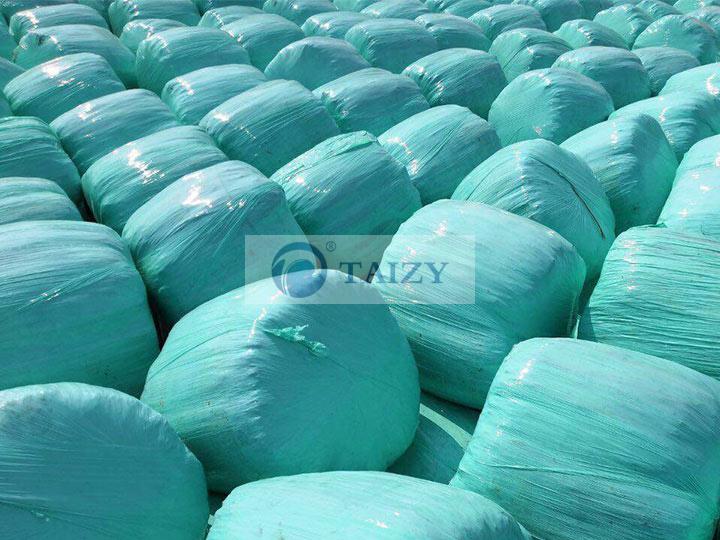
¿Cuáles son las materias primas del ensilaje?
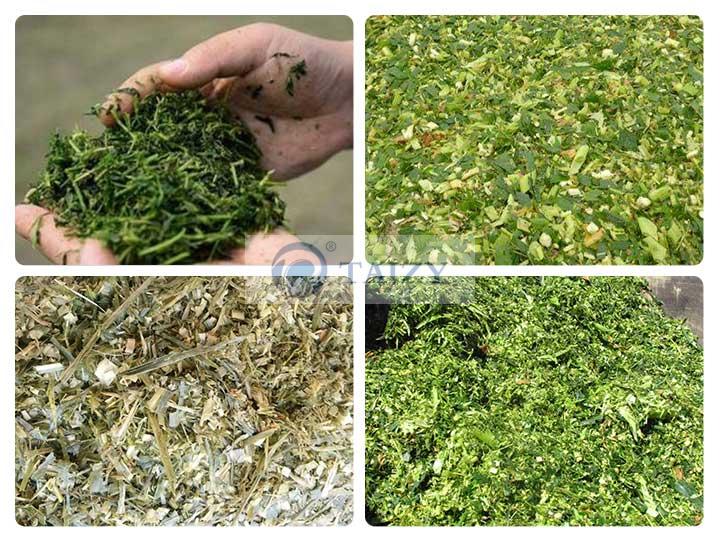
Use a cortadora de paja or a straw harvester to crush or harvest fresh crop products and by-products that contain a certain amount of sugar, such as corn stalks, wheat stalks, rice straw, sweet potato seedlings, and forage grass and other raw materials. The raw material is cut into lengths of 2-4 cm. It can be longer for those with more water content and softer, and shorter for those with less water content and harder. Various raw materials can be mixed and formulated, and the moisture content is preferably 55-70%. The prepared raw materials can be sealed, fermented, and permanently silaged by using a silage baling machine. Mature silage is green to dark green in color, soft and moist, and can be stored for about one year.
El proceso del ensilaje
There must be two processes from green pasture or straw to silage. One is the cutting or crushing of raw materials, and the other is the silage wrap. According to the livestock you raised, you can crush pasture, corn stalks, or other straw into different degrees, such as segments and kneading. After that, the crushed green feed is bundled, wrapped, and fermented by using a máquina empacadora de silo. The suitable temperature during the silage process is 20°C, and the highest temperature should not exceed 37°C. The temperature is generally controlled at 35°C. It is best not to exceed 30°C. Generally speaking, the total number of microorganisms reaches the highest peak during 5-7 days of fermentation, and lactic acid bacteria are the main ones. Normal silage fermentation generally takes 17 to 21 days.
Tipos de ensilaje
El ensilaje actual incluye ensilaje de hierba, ensilaje de maíz, ensilaje de paja de arroz, etc. Según el método de ensilaje, hay los siguientes tipos de ensilaje.
El ensilaje general: las materias primas se cortan, compactan y sellan para que las bacterias lácticas se multipliquen en un ambiente anaeróbico, convirtiendo así el almidón y los azúcares solubles en el alimento en ácido láctico. Cuando el ácido láctico alcanza una cierta concentración, inhibe el crecimiento de bacterias de deterioro y conserva los nutrientes del alimento verde.
Ensilaje semi-seco (ensilaje de baja humedad): El bajo contenido de humedad de las materias primas hace que los microorganismos se encuentren en un estado fisiológicamente seco, y su crecimiento y reproducción se inhiben. Los microorganismos en la alimentación fermentan débilmente, y los nutrientes no se descomponen, logrando así el propósito de conservar los nutrientes. Debido al bajo contenido de humedad de este tipo de ensilaje, no se exigen condiciones estrictas, por lo que en comparación con el ensilaje general, se puede usar una gama más amplia de materias primas.
Ensile con aditivos: Se añaden algunos aditivos para afectar la fermentación del ensilaje. Como agregar diversos carbohidratos solubles, inocular bacterias lácticas, añadir preparaciones enzimáticas, etc., lo que puede promover la fermentación láctica, producir rápidamente una gran cantidad de ácido láctico, de modo que el pH alcance rápidamente el requerido (3.8-4.2); o añadir diversos ácidos, agentes antibacterianos, etc. Esto puede inhibir el crecimiento de bacterias de deterioro y otros microorganismos que no son favorables para el ensilaje. Esto puede mejorar el efecto del ensilaje y ampliar la gama de materias primas del ensilaje.
El principio del ensilaje
El principio de la fermentación láctica
Silage is a kind of rough feed obtained by cutting green feed with a moisture content of 65%-75%, and under airtight anoxic conditions through the fermentation of anaerobic lactic acid bacteria to inhibit the reproduction of various bacteria. Fresh pasture and forage crops are cut by using a chuff cutter machine or a corn silage harvester machine and then wrapped the film with a baler de silaje and wrapper machine to allow the fresh pasture to ferment in an air-isolated environment. The plant cells can still perform respiration and deplete the residual oxygen in the silage material in the membrane, causing anaerobic conditions and promoting the reproduction of lactic acid bacteria. Through the anaerobic acidification process, the carbohydrates (mainly sugars ) in the silage raw materials are transformed into organic acids mainly composed of lactic acid and accumulated in the silage raw materials. When the organic acid accumulates to 0.65% to 1.30% (good silage can reach 1.5% to 2.0%), or when the pH drops below 4.2 to 4.0, most microorganisms stop reproducing. Due to the continuous accumulation of lactic acid, the acidity increases, and finally the lactic acid bacteria themselves are inhibited and stop moving, so that the feed can be stored for a long time.
Nota: El ensilaje contiene más ácidos orgánicos, lo que tiene un efecto laxante. Deja que el ganado se acostumbre gradualmente al sabor cuando comiences a alimentarlo. No es necesario sellarlo deliberadamente después de cada uso, porque en ese momento no se puede compactar, y sellarlo con tela plástica en su lugar forma un ambiente húmedo y caliente, y la fermentación secundaria es más grave.
If you have any questions about the silage baler and wrapper machine, chaff cutter machine, and straw harvester machine mentioned in the article, you can refer to our product article.