


Antes de fazer ensilagem, precisamos saber o que é ensilagem, quais são as matérias-primas, o processo, os tipos e o princípio da ensilagem.
O que é a ensilagem/ensilagem de milho?
Silage is formed by sealing and fermenting plant feeds with more water content, and cortador de grama is made by fresh corn stalk. It is mainly used to feed ruminants. Silage is more durable than fresh feed and has stronger nutrients than dry feed. In addition, the silage storage occupies a small area and there is no fire problem. Silage has a sour smell, soft and juicy, good palatability, rich nutrition, and is good for long-term storage. It is an excellent source of feed for livestock.
Quais são as matérias-primas da ensilagem?
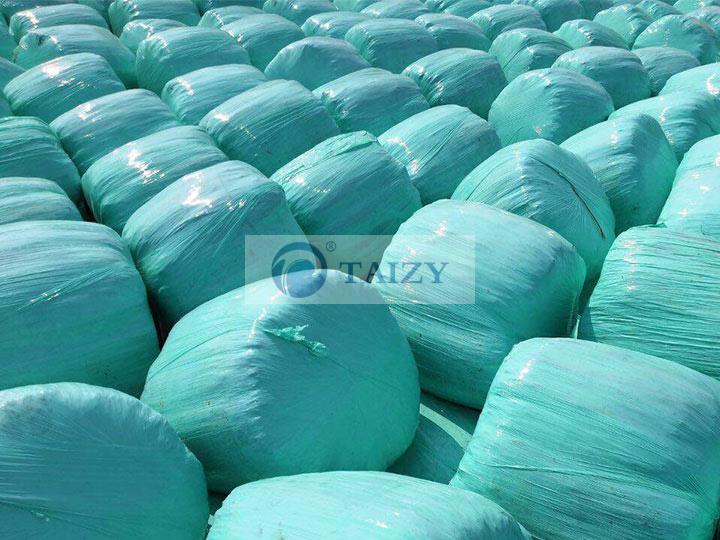
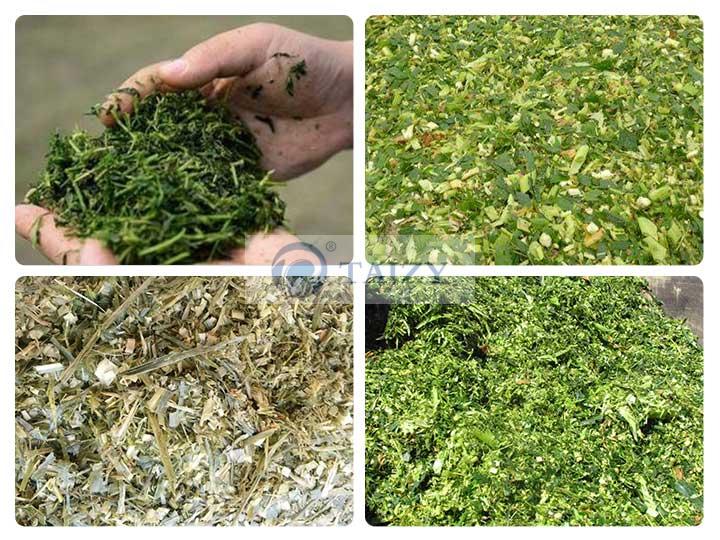
Use a Cortador de palha or a straw harvester to crush or harvest fresh crop products and by-products that contain a certain amount of sugar, such as corn stalks, wheat stalks, rice straw, sweet potato seedlings, and forage grass and other raw materials. The raw material is cut into lengths of 2-4 cm. It can be longer for those with more water content and softer, and shorter for those with less water content and harder. Various raw materials can be mixed and formulated, and the moisture content is preferably 55-70%. The prepared raw materials can be sealed, fermented, and permanently silaged by using a silage baling machine. Mature silage is green to dark green in color, soft and moist, and can be stored for about one year.
O Processo de Ensilagem
There must be two processes from green pasture or straw to silage. One is the cutting or crushing of raw materials, and the other is the silage wrap. According to the livestock you raised, you can crush pasture, corn stalks, or other straw into different degrees, such as segments and kneading. After that, the crushed green feed is bundled, wrapped, and fermented by using a máquina de ensilar. The suitable temperature during the silage process is 20°C, and the highest temperature should not exceed 37°C. The temperature is generally controlled at 35°C. It is best not to exceed 30°C. Generally speaking, the total number of microorganisms reaches the highest peak during 5-7 days of fermentation, and lactic acid bacteria are the main ones. Normal silage fermentation generally takes 17 to 21 days.
Tipos de Ensilagem
O ensilado atual inclui silagem de relva, silagem de milho, silagem de palha de arroz, entre outros. De acordo com o método de ensilagem, existem os seguintes tipos de ensilado
Ensilagem geral: as matérias-primas são picadas, compactadas e seladas para fazer as bactérias lácticas se multiplicarem em um ambiente anaeróbico, convertendo o amido e o açúcar solúvel no alimento em ácido láctico. Quando o ácido láctico acumula até uma certa concentração, inibe o crescimento de bactérias deteriorantes e preserva os nutrientes no alimento verde.
Ensilagem semi-seca (ensilagem de baixa umidade): o baixo teor de umidade das matérias-primas faz com que os microrganismos fiquem em estado fisiologicamente seco, e seu crescimento e reprodução sejam inibidos. Os microrganismos no alimento fermentam fracamente, e os nutrientes não são decompostos, atingindo assim o objetivo de preservar os nutrientes. Devido ao baixo teor de umidade deste tipo de ensilagem, outras condições não são tão rigorosas, portanto, em comparação com a ensilagem geral, uma gama mais ampla de matérias-primas pode ser utilizada.
Ensilagem aditivada: Alguns aditivos são adicionados para afetar a fermentação da ensilagem. Como a adição de vários carboidratos solúveis, inoculação de bactérias lácticas, adição de preparações enzimáticas, etc., que podem promover a fermentação láctica, produzir rapidamente uma grande quantidade de ácido láctico, de modo que o pH atinja rapidamente o valor necessário (3,8-4,2); ou adicionar vários ácidos, agentes antibacterianos, etc. Pode inibir o crescimento de bactérias deteriorantes e outros microrganismos que não são favoráveis à ensilagem. Isso pode melhorar o efeito da ensilagem e expandir a gama de matérias-primas para ensilagem.
O Princípio da Ensilagem
O Princípio da Fermentação Láctica
Silage is a kind of rough feed obtained by cutting green feed with a moisture content of 65%-75%, and under airtight anoxic conditions through the fermentation of anaerobic lactic acid bacteria to inhibit the reproduction of various bacteria. Fresh pasture and forage crops are cut by using a chuff cutter machine or a corn silage harvester machine and then wrapped the film with a empacotador de silagem and wrapper machine to allow the fresh pasture to ferment in an air-isolated environment. The plant cells can still perform respiration and deplete the residual oxygen in the silage material in the membrane, causing anaerobic conditions and promoting the reproduction of lactic acid bacteria. Through the anaerobic acidification process, the carbohydrates (mainly sugars ) in the silage raw materials are transformed into organic acids mainly composed of lactic acid and accumulated in the silage raw materials. When the organic acid accumulates to 0.65% to 1.30% (good silage can reach 1.5% to 2.0%), or when the pH drops below 4.2 to 4.0, most microorganisms stop reproducing. Due to the continuous accumulation of lactic acid, the acidity increases, and finally the lactic acid bacteria themselves are inhibited and stop moving, so that the feed can be stored for a long time.
Nota: A ensilagem contém mais ácidos orgânicos, o que tem efeito laxante. Faça com que o gado se acostume gradualmente ao sabor ao começar a alimentá-lo. Não é necessário selar deliberadamente após cada uso, pois a compactação nesse momento não pode ser feita, o selamento com pano plástico forma um ambiente húmido e quente, e a fermentação secundária é mais grave.
If you have any questions about the silage baler and wrapper machine, chaff cutter machine, and straw harvester machine mentioned in the article, you can refer to our product article.